MedEx Day Ten
- katefortigers
- Jun 12, 2024
- 4 min read
Today started very early, but it was eye opening and helpful in an unexpected way. We started off the day with an ice breaker competition between Tier One and Tier Two, which was way harder than I thought since it was "Are You Smarter Than A Fifth Grader?". It's clear that I may need to relearn some material from fifth grade! After this, we learned about how teamwork is absolutely crucial in the healthcare system in order for everything to run smoothly from Ms. Cassandra! In order to continue with this premise, we started our first round of lectures by Dr. Beth Solomon Bunch. Although it was concerning funding further healthcare education and I am not currently working on a degree through Prisma, I can see how this is EXTREMELY important for the improvement of the hospital system. Many people do not have the option or financial means to go to school in order to reach their full potential in medicine, but with the help of Dr. Beth's program, they have the ability to even if they only work part time! In fact, if I end up working through Prisma after I graduate Clemson, it's possible I could use their program to further my education in healthcare with little to no cost, which I believe can drastically improve the state of the workforce within a hospital as many of them have the option to be thoroughly educated and knowledgeable about their medicinal focus!
Next, we heard from Dr. Ashley Decker, who works for the Risk Managment team at Prisma. I have heard about the legal side of healthcare before that can come into play as a doctor if a mistake was made. It has always frightened me, but I feel more at rest with working in healthcare now that Dr. Decker talked. I realize that nobody is perfect, and that I have a support system behind me no matter what, which is a relief! Obviously, it's important to do your best work when dealing with a patient, but if an accident happens, it's not the end of my life as I know it! I also realized the absolute importance of charting and documenting EVERY event/procedure that occurs when treating a patient. When you work in healthcare, it is not an option to be lazy with your written detailing of the day.
After this lecture, we heard from Ms. Christina Dye, who discussed the absolute necessity of continuing to learn and do research even after medical school, nursing school, etc is done. She mentioned that if you were to be a part of this field, you have to come to terms with being a LIFELONG learner, which I believe interests me a great deal! I have always loved school and the whole idea of learning something new that you may have never known before excites me! At the beginning of her lecture, she even had us close our eyes and picture our lives as healthcare workers in ten years, as well as write a letter to ourselves in ten years, therefore inspiring us to remember our passion no matter how hard it may get. In fact, I got a bit emotional through this as I was picturing all the people I could help as long as I keep pushing forward in a medical career, maybe even cancer patients like my dad.

After break, we heard an empowering lecture from Mr. Jeremy Goldsmith, who is the soon to be manager of diversity, equity, and inclusion at Prisma. It was incredible to hear his story about how he got from where he was, to where he is now no matter how many setbacks he encountered. I also learned something I never thought of before: the difference between equity and equality. The way he explained it made total sense to me, and I have a newfound perspective on treating whoever walks into the door with absolute kindness and giving them the help they need no matter where they come from or what their background is. I also FULLY support the staffing of a hospital that actually LOOKS like the people they are serving!

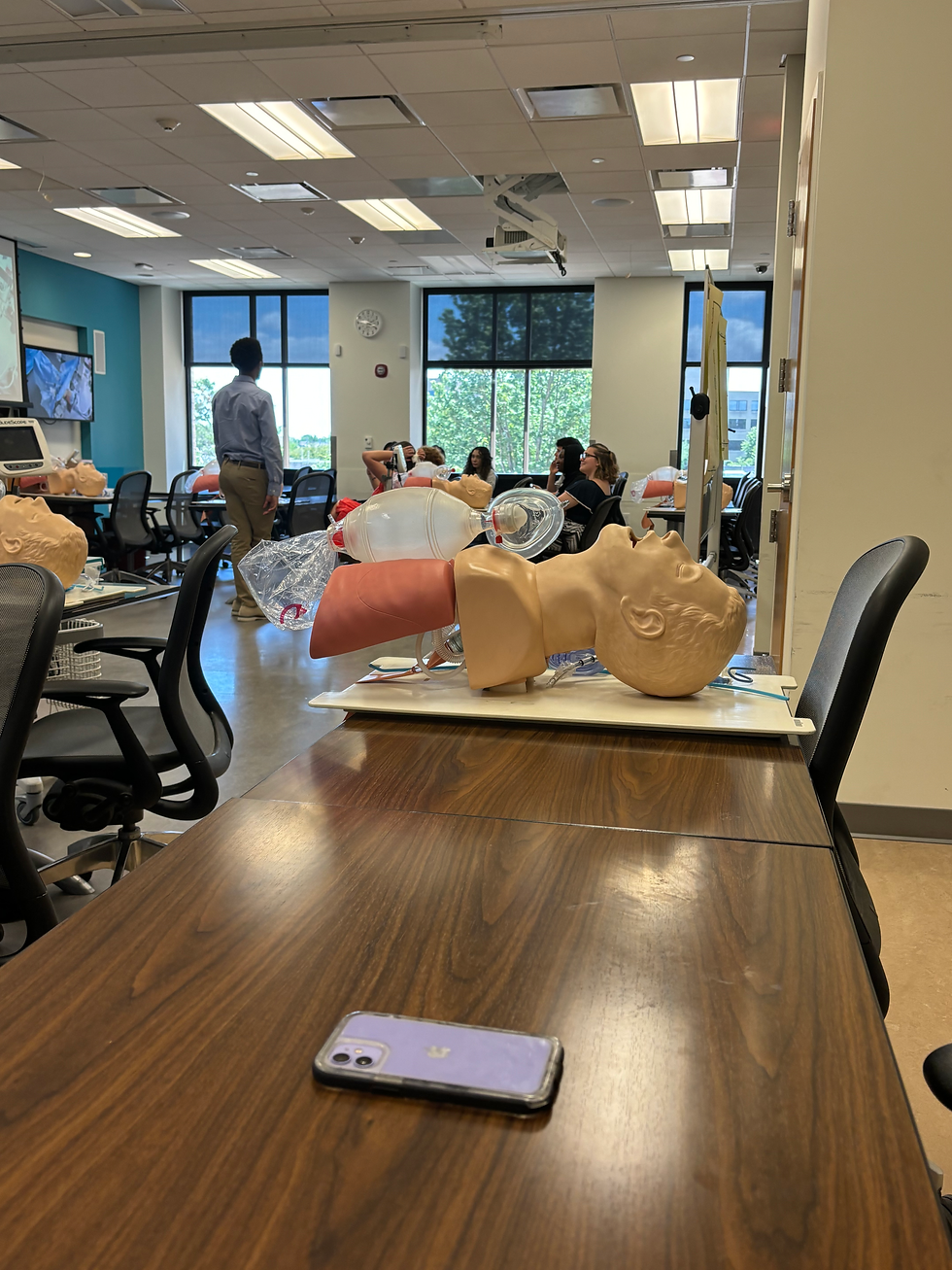
After lunch and clinical check ins for the week, we all went to the SIM center in the medical school, which I remember from Tier One! Our simulation experience today was based on a career as a CRNA, which I always thought was an incredible route to go down in medicine, even if I am not going to be a nurse. What they do is CRUCIALLY important in providing excellent healthcare, and the amount of concentration and knowledge they have to have in order to well is astounding! I saw this as I watched them complete a procedure on a mannequin to put them to sleep, and I didn't realize just how many steps were included in the anesthesia treatment of a patient! After we watched the example procedure, we were able to try intubation for ourselves, which was so fun! Part of me remembers the steps for intubation for Tier One, but I made a lot of mistakes as I may have cracked a lot of teeth! However, I was able to figure it out, and I have so much respect for the CRNAs who deal with patients of all types and have to change their intubation method based on this!


Comments